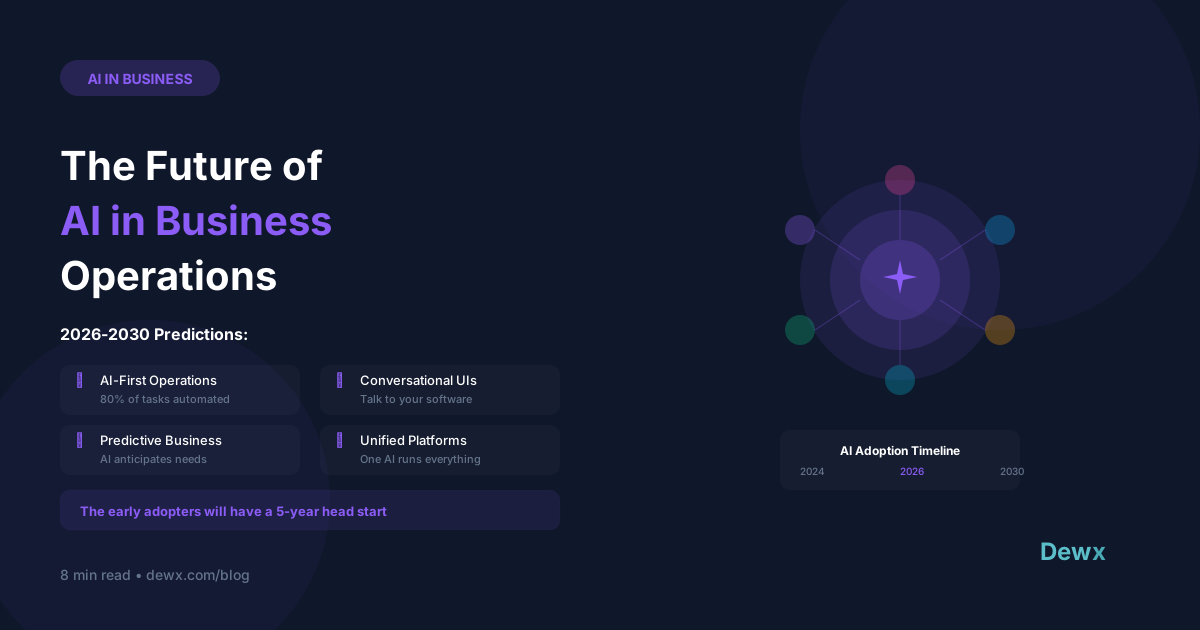
The Future of AI in Business Operations
AI in business is evolving rapidly. Here's what's ahead and how to position your business.
Where We Are Now (2026)
Current AI Capabilities:
- Text generation (emails, content)
- Conversation (chatbots, assistants)
- Data analysis and summarization
- Basic automation and workflows
- Image and document understanding
Current Limitations:
- Requires clear prompts
- Can hallucinate facts
- Limited reasoning on complex problems
- Needs human oversight
- Siloed from business systems
Where We're Heading (2026-2028)
Trend 1: Agentic AI
AI that takes action, not just generates content:
- Books meetings directly
- Sends emails without approval for routine items
- Updates systems automatically
- Completes multi-step workflows
Impact: Less "prompt engineering," more "outcome defining"
Trend 2: Contextual Business AI
AI deeply integrated with your business data:
- Knows your customers
- Understands your products
- Learns your preferences
- Acts on your behalf
Impact: AI that actually knows your business
Trend 3: Multimodal Everything
AI that works across text, voice, image, video:
- Voice commands for everything
- Document understanding
- Video call summaries
- Visual data analysis
Impact: More natural interaction
Trend 4: AI-Native Software
Software built around AI, not with AI bolted on:
- AI as the interface
- Natural language as the command line
- Automation by default
- Proactive assistance
Impact: Fundamental shift in how software works
Preparing Your Business
Short Term (Now)
- Adopt AI tools for current workflows
- Train your team on AI basics
- Identify automation opportunities
- Document processes AI can learn
Medium Term (1-2 years)
- Choose AI-native platforms over legacy + AI add-ons
- Build AI fluency as a core skill
- Rethink workflows around AI capabilities
- Invest in data quality (AI is only as good as data)
Long Term (2-3+ years)
- AI-first strategy for operations
- Competitive advantage through AI adoption speed
- New roles and skills focused on AI collaboration
- Continuous adaptation as capabilities evolve
What NOT to Do
Don't:
- Wait for "perfect" AI
- Over-automate without guardrails
- Ignore the human element
- Treat AI as a silver bullet
- Neglect data privacy and security
Do:
- Start small and iterate
- Maintain human oversight
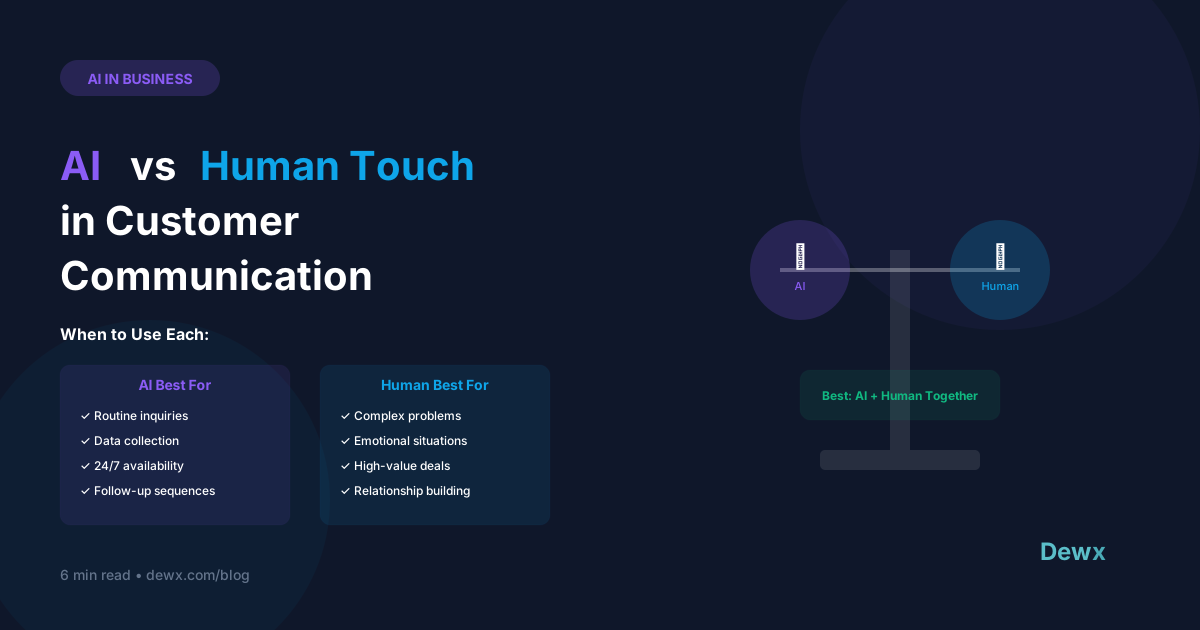
- Focus on augmentation, not replacement
- Prioritize security and compliance
- Stay informed on developments
The Dewx Vision
Dewx is built for the AI-native future:
- Dew AI as the central interface
- Natural language for all operations
- Proactive assistance across your business
- Continuous learning from your patterns
- Human-in-the-loop for important decisions
We're not adding AI to old software. We're building software around AI.
Frequently Asked Questions
How soon will AI significantly impact small business operations?
It's happening now. By 2026-2027, most SMBs will use AI for at least email drafting and customer communication. By 2028, AI-assisted operations will be the norm, not the exception. Early adopters gain competitive advantage; laggards struggle to catch up.
Should I wait for AI to mature before adopting?
No. Today's AI is practical and valuable. Waiting means your competitors get ahead. Start with low-risk applications (email drafting, scheduling) and expand as you gain confidence. The learning curve is part of the investment.
Will AI replace small business employees?
AI will change roles, not eliminate them. Routine tasks shift to AI; humans focus on judgment, relationships, and creativity. Businesses that use AI will do more with the same team. Those that ignore it will fall behind in productivity and cost structure.
How do I evaluate AI-native vs AI-bolted-on software?
AI-native: AI is the interface, built into every feature, uses your data automatically. AI-bolted-on: AI is an add-on feature, requires manual prompting, doesn't understand your business context. Dewx is AI-native—Dew understands your business and works proactively.
What skills will my team need in an AI-native future?
Prompt engineering basics, AI tool fluency, critical evaluation of AI output, and hybrid human-AI workflow design. Most importantly: adaptability. The tools will keep evolving; ability to learn new tools quickly becomes the meta-skill.
Position your business for the AI-native future. Try Dewx free and experience AI-first business software today.
Related: Meet Dew AI | AI practical guide