Automating Follow-ups with AI: Step-by-Step
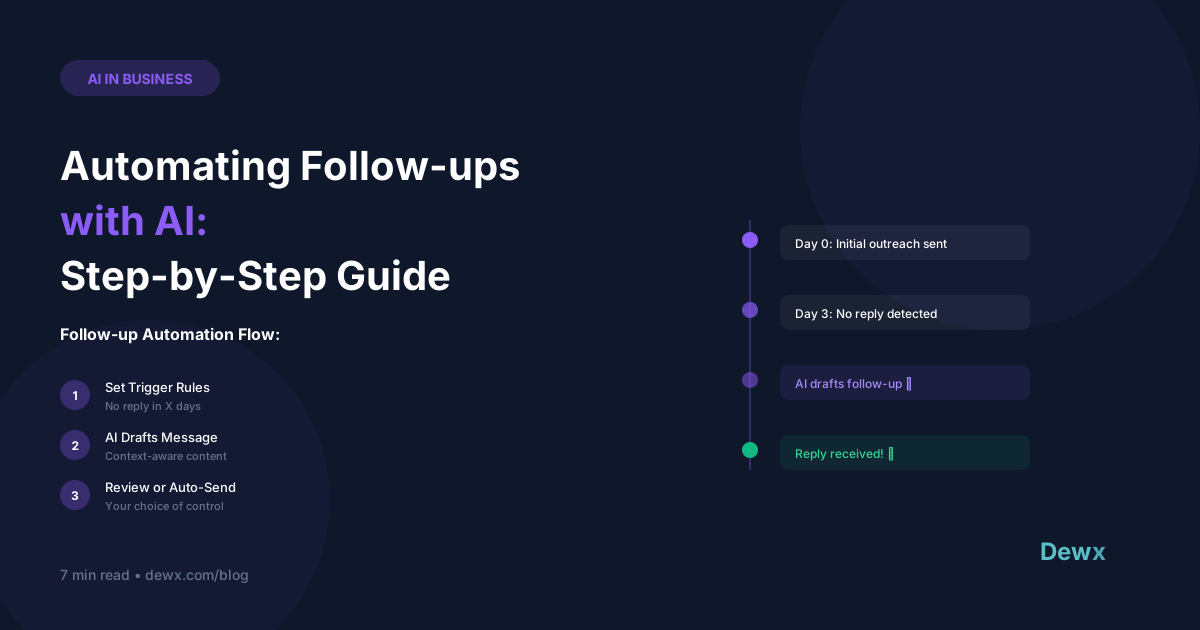
80% of sales require 5+ follow-ups. Most people give up after 2. AI can do the following up for you.
The Follow-up Problem
Why Follow-ups Fail:
- Forgetting to send them
- Not knowing what to say
- Feeling "pushy"
- Time constraints
- Poor tracking
The Solution: AI + Automation
Combine AI content generation with automated timing for personalized follow-ups at scale.
Step-by-Step Implementation
Step 1: Define Your Follow-up Sequences
Sales Lead Sequence:
- Day 1: Initial outreach
- Day 3: Value-add follow-up
- Day 7: Case study/social proof
- Day 14: Soft check-in
- Day 21: Break-up email
Post-Meeting Sequence:
- Day 0: Thank you + recap
- Day 3: Requested materials
- Day 7: Check-in
Customer Re-engagement:
- Day 30: We miss you
- Day 45: Special offer
- Day 60: Last chance
Step 2: Create AI Prompts for Each Email
Example for Sales Follow-up #2: "Draft a follow-up email to [Name] who I contacted 3 days ago about [product/service]. They haven't responded. Share a brief insight or tip relevant to [their industry/role] without being pushy. End with an easy call-to-action. Keep under 100 words."
Step 3: Generate Personalization Variables
What makes each follow-up unique?
- Recipient name
- Company name
- Previous conversation details
- Industry-specific content
- Recent trigger events
Step 4: Build the Automation
Option A: Email Marketing Tool
- Mailchimp, ConvertKit, etc.
- Pro: Built for sequences
- Con: Limited personalization
Option B: CRM Automation
- HubSpot, Pipedrive, etc.
- Pro: Integrated with contacts
- Con: Template-based, less AI
Option C: AI-Integrated Platform
- Dewx with Dew AI
- Pro: AI generates personalized content
- Con: Newer approach
Step 5: Test and Optimize
Track:
- Open rates by email position
- Reply rates
- Opt-out rates
- Conversion rates
Adjust:
- Timing between emails
- Subject lines
- Content approach
- Call-to-action strength
AI Follow-up Best Practices
Do:
- Add genuine value in each email
- Vary the approach (don't repeat yourself)
- Reference previous communications
- Make it easy to respond
Don't:
- Send carbon-copy messages
- Follow up too frequently
- Use guilt trips
- Automate without review
Example AI-Generated Sequence
Email 1 (Day 0):
"Hi [Name], great chatting at [event]. As promised, here's the [resource] we discussed. Let me know if you'd like to explore how we can help with [their challenge]."
Email 2 (Day 3):
"Hi [Name], thought you might find this interesting: [relevant insight]. Seeing lots of [their industry] companies tackle this successfully. Happy to share what's working if useful."
Email 3 (Day 7):
"Hi [Name], following up briefly. [Similar company] just achieved [result] using our approach. Would a quick call to see if this could work for [their company] be worth 15 minutes?"
Email 4 (Day 14):
"Hi [Name], checking in one more time. If timing isn't right, totally understand. Just want to make sure this didn't slip through the cracks. Reply 'Later' and I'll follow up in a few months."
Implementing in Dewx
Dew makes follow-up automation simple:
- Tracks all conversations automatically in your unified inbox
- Flags contacts needing follow-up in your CRM
- Drafts personalized messages with full context
- Schedules sends at optimal times
Tell Dew: "Set up follow-ups for all leads who haven't replied in 3 days."
Frequently Asked Questions
How many follow-ups is too many?
Research shows 5-7 touchpoints is optimal for B2B sales. The key is adding value with each message, not just saying "checking in." After 5-7 attempts with no response, send a "break-up" email and move on. Track opt-outs and respect them immediately.
Should AI follow-ups sound automated?
No. The goal is personalized content at scale. Use AI to generate unique messages based on the recipient's context—their company, previous conversations, industry. Dew AI pulls context from your CRM to make each follow-up feel personal.
What's the best timing between follow-up emails?
For sales leads: Day 1, Day 3, Day 7, Day 14, Day 21. For post-meeting: Day 1, Day 3, Day 7. For customer re-engagement: Day 30, Day 45, Day 60. Adjust based on your sales cycle length. Avoid Mondays and Fridays for cold follow-ups.
How do I track which follow-ups are working?
Track open rates, reply rates, and conversion rates by email position in the sequence. Your CRM should show which touchpoint converted leads. A/B test subject lines and message approaches. Double down on what works.
Can I automate follow-ups across channels?
Yes, though it requires the right tools. Dewx enables multi-channel sequences across email, WhatsApp, and LinkedIn from your unified inbox. Vary your channel—if email isn't working, try WhatsApp or LinkedIn.
Ready to automate personalized follow-ups? Try Dewx free and never let a lead fall through the cracks.
Related: Follow-up email templates | Lead nurturing guide