
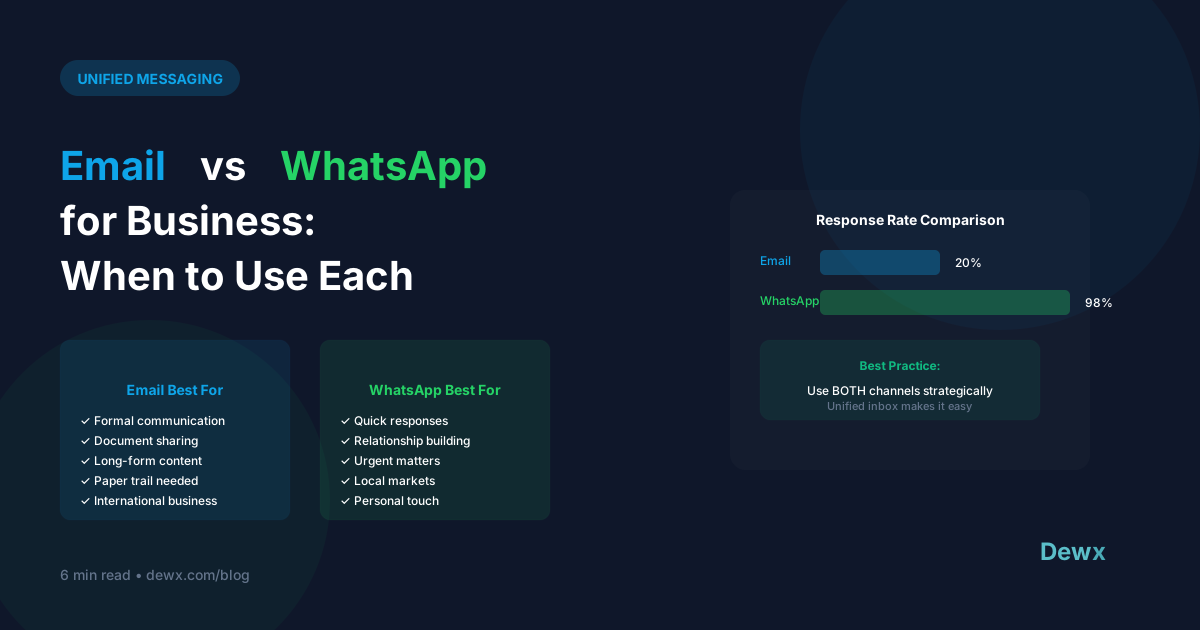
Email vs WhatsApp for Business: When to Use Each Channel
Both email and WhatsApp have their place in business communication. The key is knowing when to use each.
The Numbers Don't Lie
| Metric | ||
|---|---|---|
| Open rate | 20-25% | 98% |
| Response time | 24-48 hours | 1-2 hours |
| Formality | High | Medium-Low |
| Documentation | Excellent | Limited |
| Global reach | Universal | Strong (varies) |
When to Use Email
✅ Use Email For:
1. Formal Communication
- Contracts and agreements
- Official announcements
- Legal matters
- Anything requiring a paper trail
2. Long-Form Content
- Detailed proposals
- Documentation
- Reports and summaries
- Complex explanations
3. Attachments and Files
- Large documents
- Multiple attachments
- Formal deliverables
4. Scheduling and Invites
- Calendar invitations
- Meeting agendas
- Event invitations
5. Cold Outreach
- First-time contact
- Unsolicited proposals
- Partnership inquiries
When to Use WhatsApp
✅ Use WhatsApp For:
1. Quick Questions
- Yes/no decisions
- Schedule confirmations
- Brief clarifications
2. Time-Sensitive Messages
- Urgent updates
- Last-minute changes
- Immediate coordination
3. Relationship Building
- Casual check-ins
- Quick wins sharing
- Personal updates
4. Ongoing Projects
- Day-to-day coordination
- Quick feedback loops
- Status updates
5. Warm Communication
- Existing relationships
- Post-meeting follow-ups
- Friendly reminders
The Hybrid Approach
Smart businesses use both channels strategically:
Initial Contact: Email (formal, documented) Ongoing Communication: WhatsApp (quick, responsive) Important Decisions: Email (documented) Quick Coordination: WhatsApp (efficient)
Regional Considerations
WhatsApp dominance varies by region:
- Strong: Europe, Latin America, Asia, Middle East, Africa
- Mixed: United States, Canada (SMS more common)
- Limited: China (WeChat dominates)
Know your audience's preferences.
Managing Both Channels
The challenge is keeping track of conversations that span both channels. Dewx Portal unifies email and WhatsApp in one inbox, so you can:
- See full conversation history across channels
- Switch channels without losing context
- Use Dew AI to suggest the right channel
- Never miss a message on either platform
- Connect with your CRM for complete context
For businesses managing multiple WhatsApp accounts, see our guide on managing multiple WhatsApp Business accounts.
Frequently Asked Questions
Can I use both WhatsApp and email for the same client?
Absolutely. Many businesses use email for formal documentation and contracts, then WhatsApp for quick day-to-day coordination. The key is consistency. With a unified inbox, you can see both channels side-by-side and switch seamlessly without losing context.
Does WhatsApp have the same legal standing as email?
In most jurisdictions, WhatsApp messages are legally admissible, but email is generally preferred for formal agreements. For contracts, proposals, and anything requiring a clear audit trail, send via email. WhatsApp is better for discussions leading up to those formal documents.
Which channel has better engagement rates?
WhatsApp typically sees 98% open rates vs email's 20-25%. However, engagement depends on context. A well-crafted email to the right person can outperform a WhatsApp blast. For sales outreach, test both channels and measure response rates in your CRM.
How do I train my team on channel selection?
Create a simple decision framework: "If urgent or requires a quick answer, use WhatsApp. If formal, detailed, or needs documentation, use email." Then use a unified inbox so the team can handle both channels efficiently from one dashboard.
Can AI help choose the right channel for each message?
Yes. Dew, the AI assistant in Dewx, analyzes conversation context and can suggest the optimal channel. For example, it might recommend switching to email for a detailed proposal after a WhatsApp discovery call.
Ready to unify your communication? Try Dewx free and manage email and WhatsApp in one place.


