
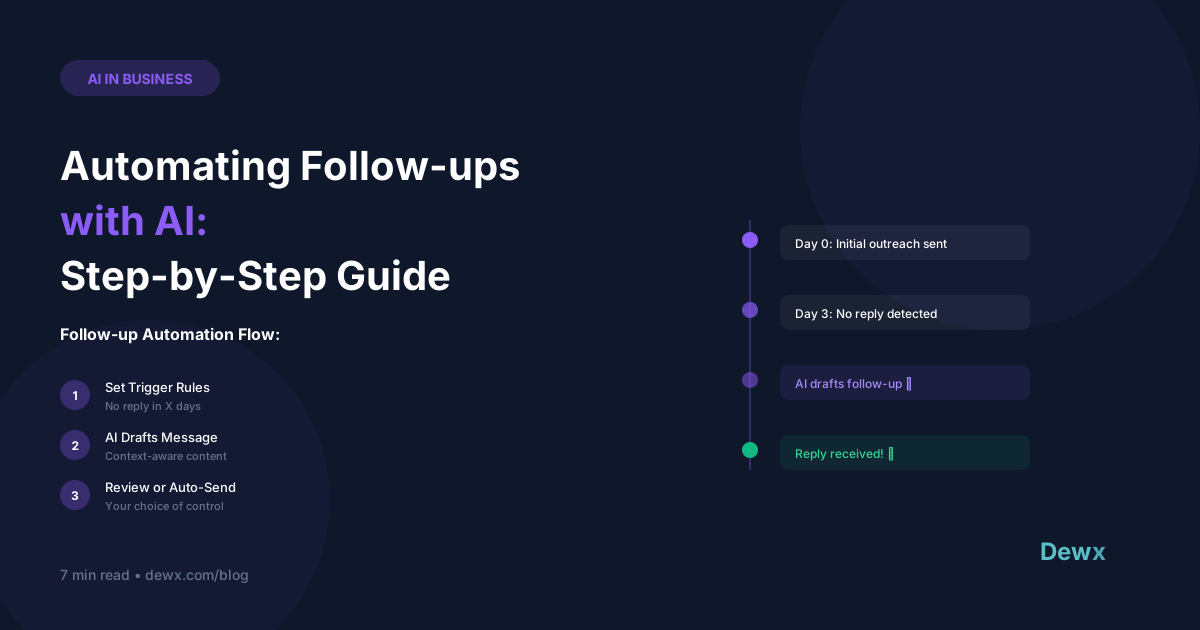
Automating Follow-ups with AI: Step-by-Step
80% of sales require 5+ follow-ups. Most people give up after 2. AI can do the following up for you.
The Follow-up Problem
Why Follow-ups Fail:
- Forgetting to send them
- Not knowing what to say
- Feeling "pushy"
- Time constraints
- Poor tracking
The Solution: AI + Automation
Combine AI content generation with automated timing for personalized follow-ups at scale.
Step-by-Step Implementation
Step 1: Define Your Follow-up Sequences
Sales Lead Sequence:
- Day 1: Initial outreach
- Day 3: Value-add follow-up
- Day 7: Case study/social proof
- Day 14: Soft check-in
- Day 21: Break-up email
Post-Meeting Sequence:
- Day 0: Thank you + recap
- Day 3: Requested materials
- Day 7: Check-in
Customer Re-engagement:
- Day 30: We miss you
- Day 45: Special offer
- Day 60: Last chance
Step 2: Create AI Prompts for Each Email
Example for Sales Follow-up #2: "Draft a follow-up email to [Name] who I contacted 3 days ago about [product/service]. They haven't responded. Share a brief insight or tip relevant to [their industry/role] without being pushy. End with an easy call-to-action. Keep under 100 words."
Step 3: Generate Personalization Variables
What makes each follow-up unique?
- Recipient name
- Company name
- Previous conversation details
- Industry-specific content
- Recent trigger events
Step 4: Build the Automation
Option A: Email Marketing Tool
- Mailchimp, ConvertKit, etc.
- Pro: Built for sequences
- Con: Limited personalization
Option B: CRM Automation
- HubSpot, Pipedrive, etc.
- Pro: Integrated with contacts
- Con: Template-based, less AI
Option C: AI-Integrated Platform
- Dewx with Dew AI
- Pro: AI generates personalized content
- Con: Newer approach
Step 5: Test and Optimize
Track:
- Open rates by email position
- Reply rates
- Opt-out rates
- Conversion rates
Adjust:
- Timing between emails
- Subject lines
- Content approach
- Call-to-action strength
AI Follow-up Best Practices
Do:
- Add genuine value in each email
- Vary the approach (don't repeat yourself)
- Reference previous communications
- Make it easy to respond
Don't:
- Send carbon-copy messages
- Follow up too frequently
- Use guilt trips
- Automate without review
Example AI-Generated Sequence
Email 1 (Day 0):
"Hi [Name], great chatting at [event]. As promised, here's the [resource] we discussed. Let me know if you'd like to explore how we can help with [their challenge]."
Email 2 (Day 3):
"Hi [Name], thought you might find this interesting: [relevant insight]. Seeing lots of [their industry] companies tackle this successfully. Happy to share what's working if useful."
Email 3 (Day 7):
"Hi [Name], following up briefly. [Similar company] just achieved [result] using our approach. Would a quick call to see if this could work for [their company] be worth 15 minutes?"
Email 4 (Day 14):
"Hi [Name], checking in one more time. If timing isn't right, totally understand. Just want to make sure this didn't slip through the cracks. Reply 'Later' and I'll follow up in a few months."
Implementing in Dewx
Dew makes follow-up automation simple:
- Tracks all conversations automatically
- Flags contacts needing follow-up
- Drafts personalized messages with full context
- Schedules sends at optimal times
Tell Dew: "Set up follow-ups for all leads who haven't replied in 3 days."
Ready to automate your follow-ups? Try Dewx.